Best Almond Milk Juicer for Fresh, Creamy Homemade Plant-Based Milk
Make fresh, creamy plant-based milk at home with the best almond milk juicer. Enjoy efficient extraction, maximum nutrition, and delicious homemade almond milk with ease.

Have you ever wondered what's actually lurking in that carton of almond milk sitting in your fridge? Are you tired of paying premium prices for plant-based milk that contains more additives than actual almonds? What if you could whip up fresh, creamy almond milk right in your own kitchen whenever you fancy it?
Making your own almond milk at home has become increasingly popular across Australia, and for good reason. Not only do you get complete control over what goes into your milk, but you also avoid preservatives, thickeners, and unnecessary sugars. Plus, there's something incredibly satisfying about pouring silky smooth milk that you've made yourself over your morning granola.
In this guide, we'll walk you through everything you need to know about finding the perfect almond milk juicer for your kitchen. You'll discover how these handy machines work, which types produce the creamiest results, and whether making your own plant-based milk actually saves you money. We'll also share our top picks for 2024, a step-by-step guide to getting that perfect texture, and clever ways to use up leftover almond pulp. Whether you're a complete beginner or looking to upgrade your current setup, you'll find everything you need right here.
What is an Almond Milk Juicer and How Does It Work?
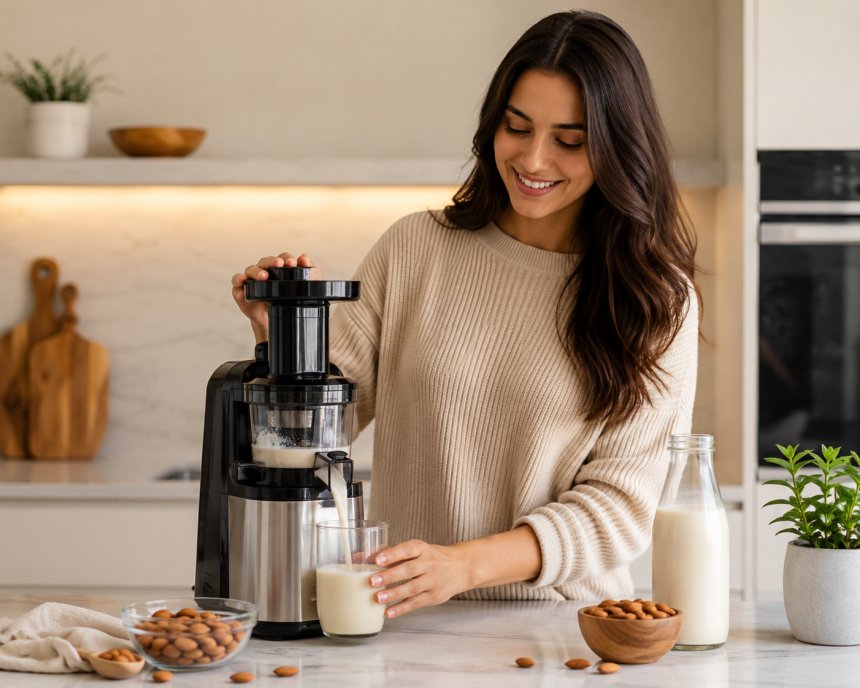
An almond milk juicer is a kitchen appliance specifically designed to transform soaked nuts into smooth, drinkable milk. These machines work by grinding the almonds while simultaneously extracting the liquid, leaving you with creamy milk and dry pulp in separate containers.
The Difference Between a Juicer and a Nut Milk Maker
While both can produce plant-based milk, there are key distinctions worth noting. A traditional juicer extracts liquid from fruits and vegetables, but certain models handle nuts brilliantly too. Dedicated nut milk makers, on the other hand, are purpose-built machines that heat, blend, and strain all in one go.
Nut milk makers often include pre-programmed settings for different types of plant milk. They're generally more hands-off and can produce warm or cold milk depending on your preference. Juicers require a bit more preparation but offer versatility for other kitchen tasks beyond milk-making.
Key Features to Look for in an Almond Milk Machine
When shopping for your ideal machine, consider motor power first—you'll want at least 150 watts for smooth results. Look for fine mesh filters or straining systems that separate pulp effectively. Easy-to-clean components are absolutely essential, as dried almond residue can be stubborn to remove.
Capacity matters too, especially if you're making milk for the whole family. Most home machines produce between 600ml and 1.5 litres per batch. Noise levels vary significantly between models, so check reviews if you're planning early morning milk-making sessions.
Can You Make Almond Milk with a Juicer?
Absolutely! Many juicers handle almond milk production beautifully, though not all types are created equal for this purpose.
Types of Juicers Suitable for Nut Milk
Masticating juicers, also called slow juicers, work best for nut milk. These machines use a single auger that rotates slowly to crush and squeeze ingredients. The gentle process preserves nutrients and produces excellent extraction rates from soaked almonds.
Twin-gear juicers offer even better results, using two interlocking gears to thoroughly grind nuts. However, they come with a higher price tag and larger footprint. Centrifugal juicers, while great for fruits, generally struggle with the density of soaked nuts.
Cold Press vs Centrifugal: Which Produces Creamier Results?
Cold press juicers win hands down for creamy almond milk. The slow extraction process doesn't generate heat, which means no oxidation or nutrient loss. You'll notice the milk tastes fresher and has a smoother mouthfeel compared to other methods.
Centrifugal juicers spin at high speeds, creating friction and heat that can affect both taste and texture. The resulting milk often separates more quickly and lacks that luxurious creaminess. For the best homemade almond milk, cold press is the way to go.
Best Almond Milk Makers in Australia: Top Picks for 2024
Finding the right machine depends on your budget, kitchen space, and how often you plan to make plant-based milk.
Best Overall Nut Milk Maker for Home Use
The Almond Cow stands out as a fantastic all-rounder for Australian kitchens. It's incredibly user-friendly, producing fresh milk in under two minutes with minimal cleanup required. The machine handles various nuts, oats, and seeds, giving you plenty of options beyond almond milk.
Best Budget-Friendly Option
For those watching their spending, the Nutra Machine offers excellent value. Priced well under $200, it creates smooth plant-based milk and includes multiple pre-set programmes. The compact design suits smaller kitchens, and the glass pitcher goes straight in the dishwasher.
Best Premium Plant-Based Milk Machine
If you're after top-tier performance, consider the Chef Wave Milk made. This sleek machine features a self-cleaning function and touchscreen controls. It produces exceptionally smooth milk with virtually no waste, making it perfect for serious plant-based milk enthusiasts.
Is It Cheaper to Make Your Own Almond Milk?
Let's crunch the numbers and see whether homemade actually saves you dollars.
Cost Breakdown: Homemade vs Store-Bought
A litre of quality store-bought almond milk typically costs between $4 and $6 in Australia. Making the same amount at home requires roughly 100-150 grams of almonds, costing approximately $1.50 to $2.50 depending on where you shop. That's a potential saving of 50-60% per litre.
The initial investment in a good machine range from $100 to $400. However, if you're drinking plant-based milk regularly, you'll recoup that cost within six months to a year of home production.
Long-Term Savings and Environmental Benefits
Beyond the financial savings, making your own milk significantly reduces packaging waste. No more tetra paks heading to landfill or recycling centres. You're also cutting down on transportation emissions since those almonds travel much lighter than pre-made milk.
The leftover almond pulp adds extra value too. Rather than paying for both milk and almond flour separately, you get both from one batch of nuts.
How to Make Almond Milk at Home: Step-by-Step Guide
Creating beautiful homemade almond milk is simpler than you might think.
Preparing Your Almonds for the Best Results
Start by soaking raw almonds in filtered water for at least 8-12 hours, or overnight. This softens them considerably and makes blending much easier. Drain and rinse thoroughly before use—the soaking water can taste slightly bitter.
For one litre of milk, use approximately one cup of soaked almonds. You can adjust this ratio depending on how thick or thin you prefer your milk.
Achieving That Silky, Creamy Texture Every Time
Add your soaked almonds to your machine along with fresh filtered water. A pinch of salt enhances the flavour beautifully. For sweetened milk, add a pitted date or small drizzle of maple syrup.
Run your machine according to its instructions, then strain if necessary. Some machines produce perfectly smooth milk straight away, while others benefit from an extra pass through a nut milk bag. Store in a sealed glass bottle in the fridge.
What Can You Do with Leftover Almond Pulp?
Don't toss that pulp—it's incredibly versatile! Spread it on a baking tray and dry it out in a low oven to create almond flour for baking. Add it to smoothies for extra fibre and protein. Mix it into porridge, energy balls, or homemade granola bars. You can even use it as a face scrub by combining it with honey.
Common Mistakes to Avoid When Making Homemade Nut Milk
Skipping the soaking step results in grainy, thin milk. Using too few almonds produces watery results. Not straining properly leaves an unpleasant texture. Forgetting to refrigerate immediately allows bacteria to grow. Using tap water instead of filtered can affect the taste significantly.
How Long Does Homemade Almond Milk Last?
Fresh homemade almond milk keeps for 3-5 days in the fridge when stored in an airtight container. It's normal for the milk to separate—just give it a good shake before pouring. If it smells sour or looks chunky, it's time to make a fresh batch.
Almond Milk Juicer vs Blender: Which Should You Choose?
A high-powered blender combined with a nut milk bag can certainly make decent almond milk. However, dedicated machines save time and mess. Juicers and nut milk makers extract more liquid from the almonds, producing less waste. If you're making plant-based milk several times weekly, investing in a proper machine makes perfect sense.
Final Verdict: Choosing the Right Almond Milk Juicer for Your Kitchen
After exploring all the options, it's clear that the best almond milk juicer for you depends on your specific needs and budget. If convenience tops your priority list, a dedicated nut milk maker like the Almond Cow delivers hassle-free results every time. For those wanting versatility beyond just milk-making, a quality masticating juicer offers excellent value.
The bottom line? Making your own almond milk is absolutely worth the effort. You'll enjoy fresher, tastier milk without mysterious additives, save money in the long run, and reduce your environmental footprint. Whether you opt for a budget-friendly option or splash out on a premium machine, you're making a brilliant choice for your health and wallet.
So why not give it a go? Start with a simple setup, perfect your technique, and before long you'll wonder why you ever bought those cartons from the supermarket. Your morning coffee deserves better—and now you know exactly how to deliver it. Cheers to creamy, delicious homemade almond milk!
Share
What's Your Reaction?
 Like
1
Like
1
 Dislike
0
Dislike
0
 Love
1
Love
1
 Funny
0
Funny
0
 Angry
0
Angry
0
 Sad
0
Sad
0
 Wow
1
Wow
1